
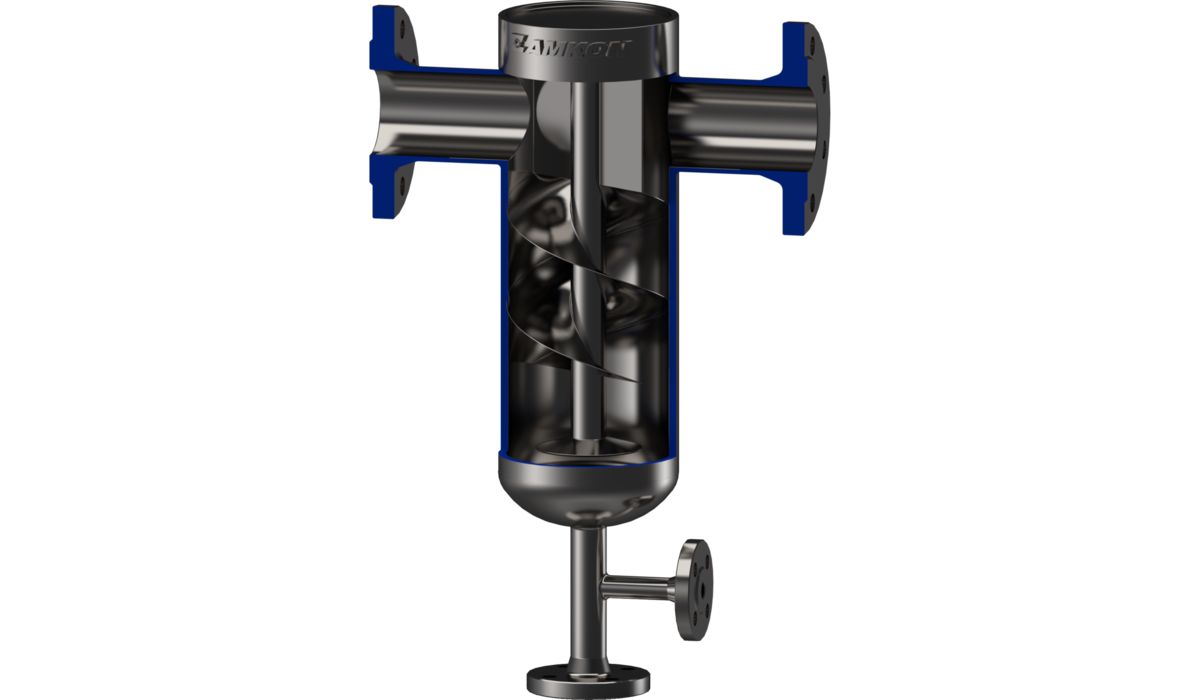
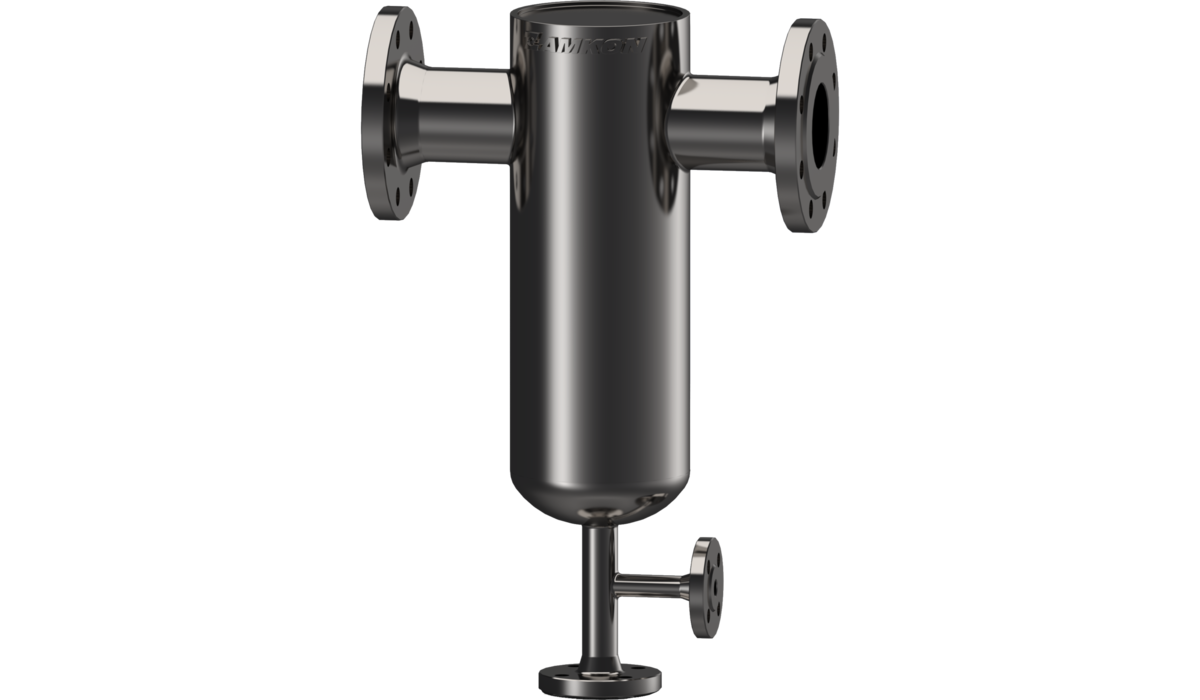
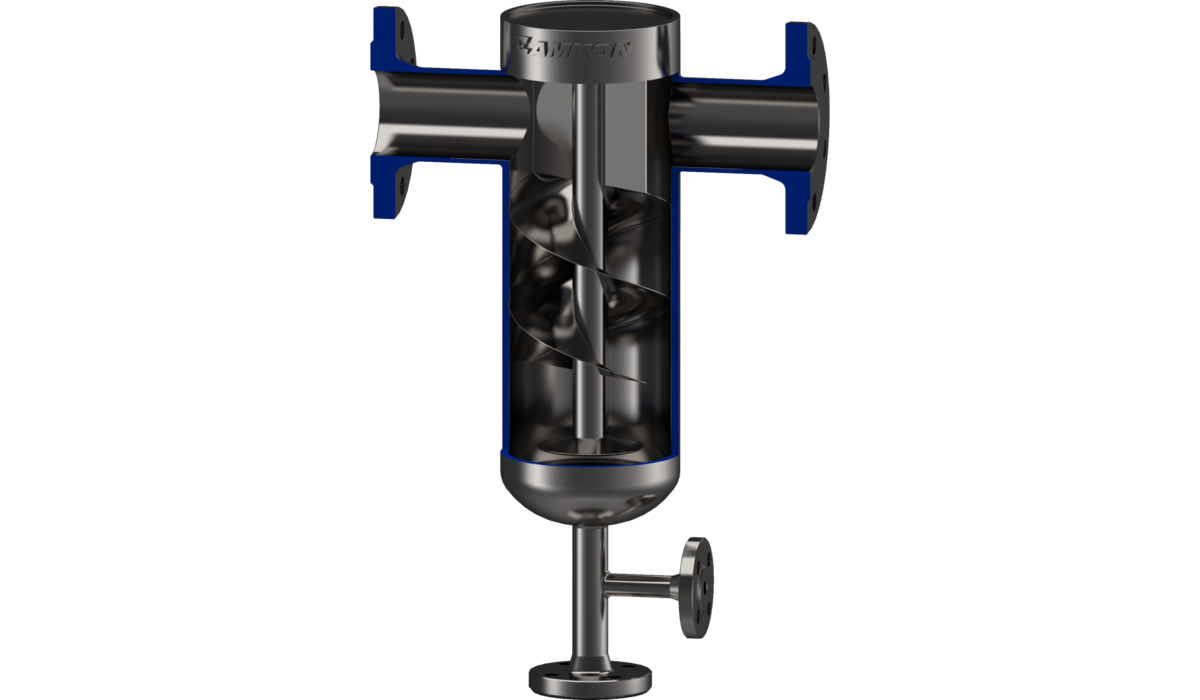
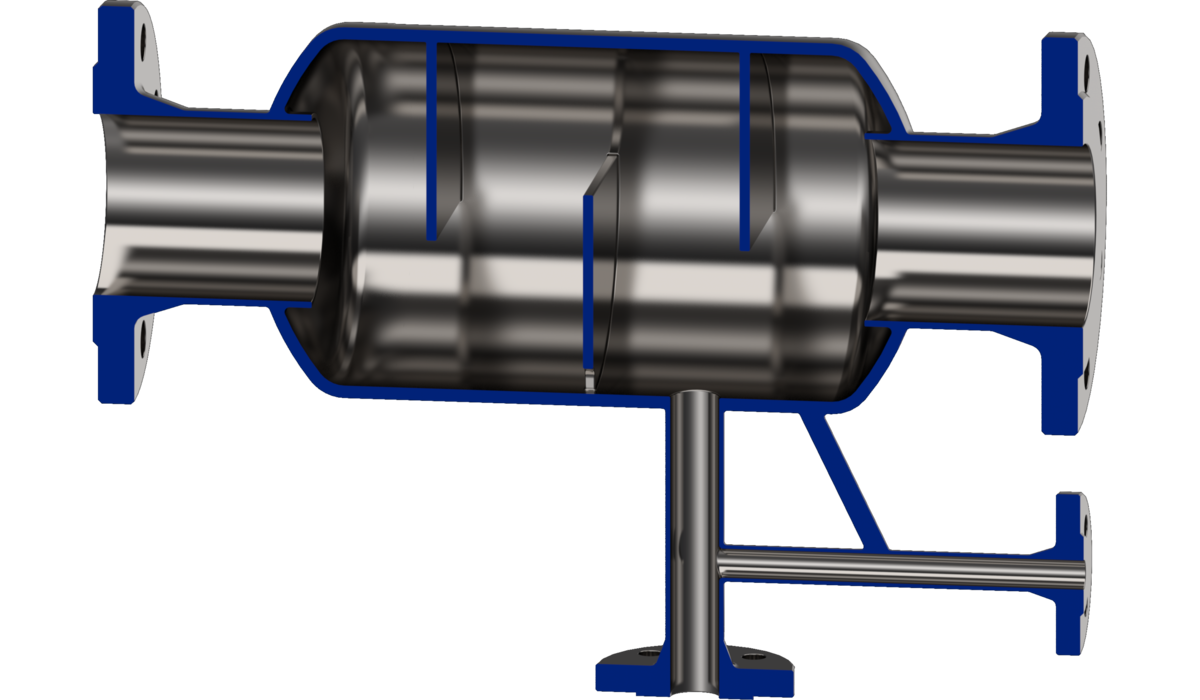
The steam and gas separator is a pressure vessel that separates condensate from flowing steam (air). Steam separators are installed upstream of heat consumers requiring high-quality steam (dry and free of impurities), or immediately after the main boiler outlet valve to capture temporary water carryover. Air (gas) separators are installed upstream of air consumers, such as measuring equipment or pneumatic actuators, that also require high-quality air.
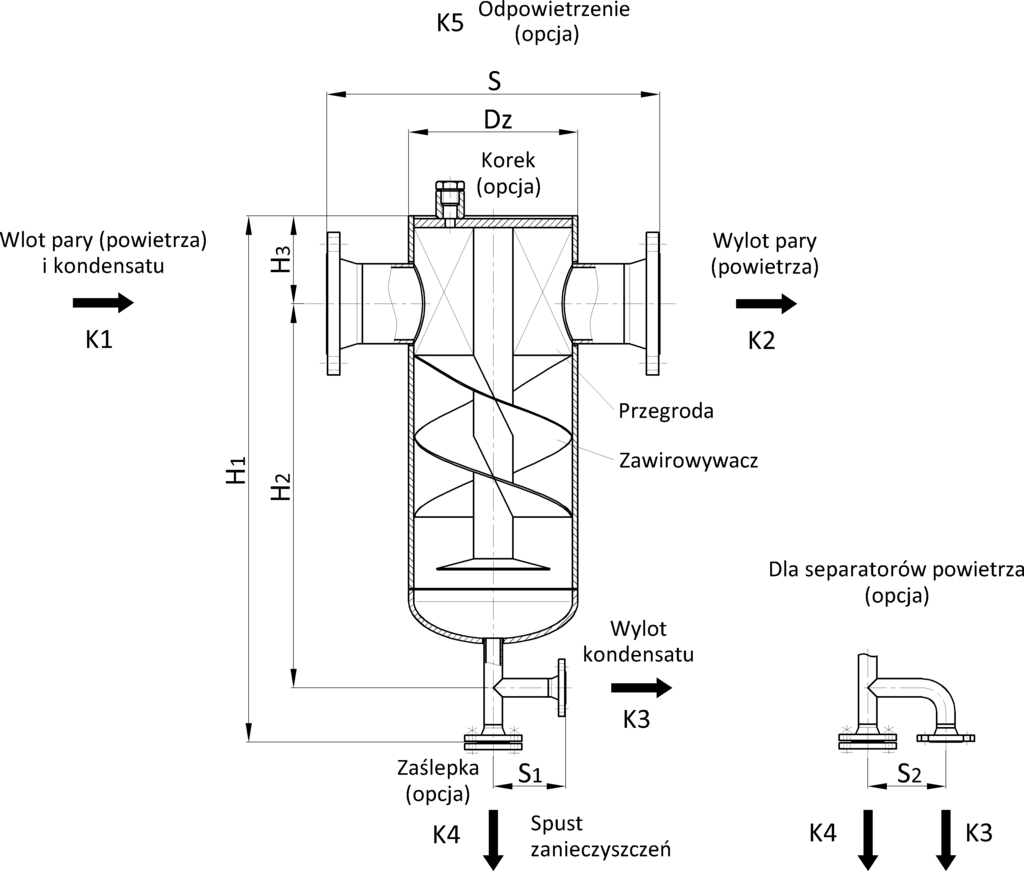
Wet steam (air) and impurities enter through K1; an internal double-spiral flow swirler changes the flow direction. Centrifugal force separates the denser particles, namely condensate and solid impurities, which flow down the walls to the separator bottom. The steam (air) then changes direction abruptly as it passes from one spiral to the other. Steam (air) leaves through K2, while the separated condensate and impurities flow to the bottom and are discharged through:
- K3, which must be fitted with a steam trap offering the highest resistance to impurities. K3 can face sideways or downwards depending on the inverted bucket trap used.
- K4, used to discharge impurities, can have a blind flange or be modified with an additional dirt collection chamber or a valve for removing accumulated sediment.
- K5 (optional) can be used for venting, for example during testing, or for fitting measuring instruments.
For operator safety, undo any drain blind flange only after reducing separator pressure to atmospheric pressure. Insulate the separator when it operates at elevated temperatures.
Downloads:
Datasheet — Steam and gas separator SPZ-12 DUO — PDF, PL Datasheet — Steam and gas separator SPZ-12 · Rev. 0023 — PDF, PL