Valve selection and pipeline cleanliness: how damage develops
Valve failure can arise from a mismatch with the process or from storage, installation and commissioning conditions. This document considers those stages together and illustrates the consequences with photographs of actual components.
Selection starts with the medium and duty
The opening section considers medium properties, temperature, pressure and the required valve duty. Material compatibility, viscosity, seal type and flow conditions all matter. Isolation and control duties are not automatically interchangeable. Selecting a nominal size does not resolve these questions, and pressure designations need to be read with the temperature and material limits of the particular version.
Storage affects equipment condition too
A photograph of stored equipment shows that internal surfaces can be exposed before installation. Port protection, packaging and storage conditions are intended to limit moisture and contamination. The document connects these measures with the manufacturer’s instructions and subsequent condition checks. Equipment that has not yet been operated may still need inspection.
Particles reach the sealing surfaces
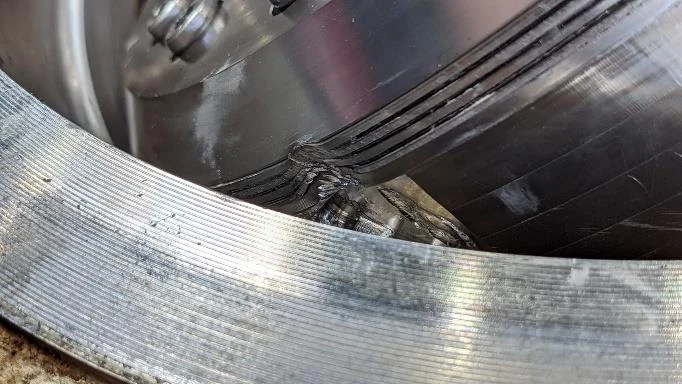
The photographs show scratches and damage around contact surfaces as well as foreign fragments. A particle between a plug, disc or wedge and its seat can prevent closure and cause leakage. Applying greater force does not remove the cause. An example of a damaged operating assembly after use of a long valve key shows how that response can extend the failure.
Filtration and pipeline preparation
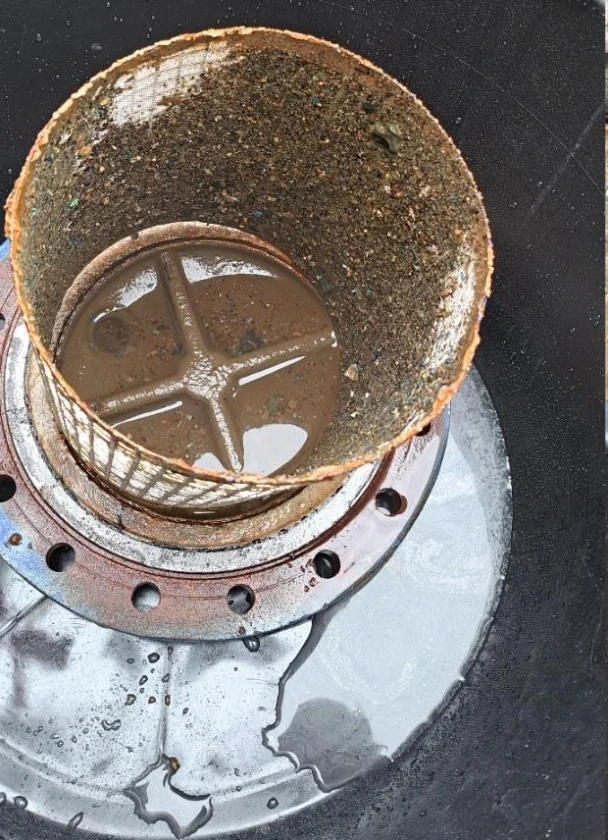
Contaminated strainer elements and deposits on butterfly valve components illustrate material carried by the medium. A strainer retains some particles but itself requires inspection for blockage and cleaning under the appropriate service conditions. Preparation before commissioning, removal of work residues and subsequent inspections are essential. Strainer selection and maintenance planning need to reflect the actual contaminants.
A repair needs a verified result
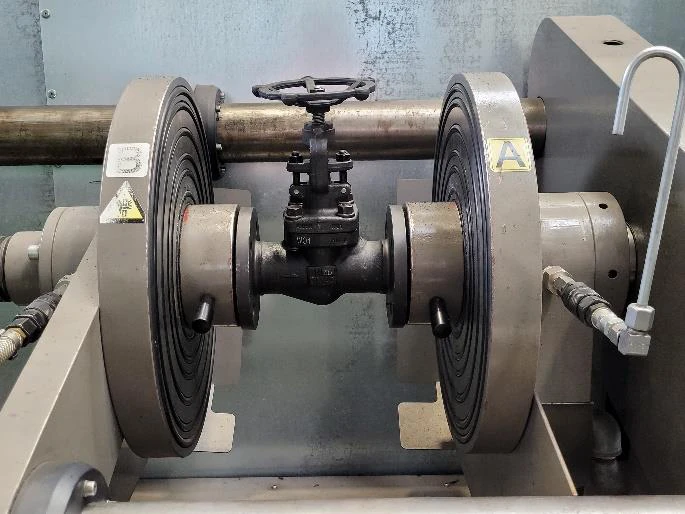
Test-bench photographs illustrate checks following service work. Assessment includes component condition, reassembly and verification of operation and tightness under the test conditions. The cases help identify damage mechanisms. Percentages appearing in the document are not repeated here as failure statistics because their derivation is not stated.
Oxygen-service valves: maintain the cleanliness regime
The final example concerns oxygen-service valve components, contamination and preparation for reuse. The required cleanliness must also be maintained during assembly and installation checks. This account is not a do-it-yourself cleaning procedure for oxygen equipment. The method must follow the relevant documentation, process requirements and procedures of those carrying out the work.