Modern steam tracing: RFM and ZFM stations
Steam tracing protects a medium against cooling or freezing and helps maintain suitable flow conditions. Central stations organise an installation made up of many short steam circuits.
From product temperature to the steam circuit
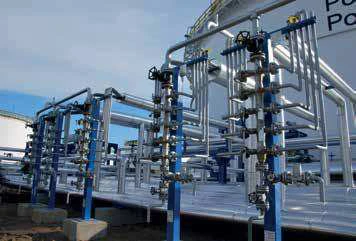
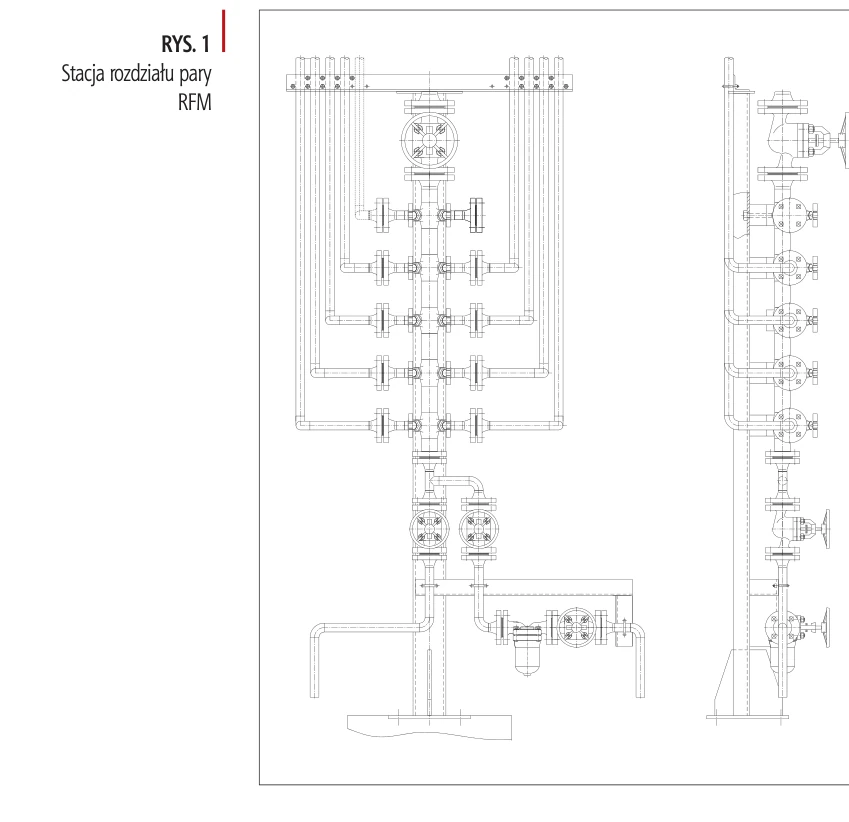
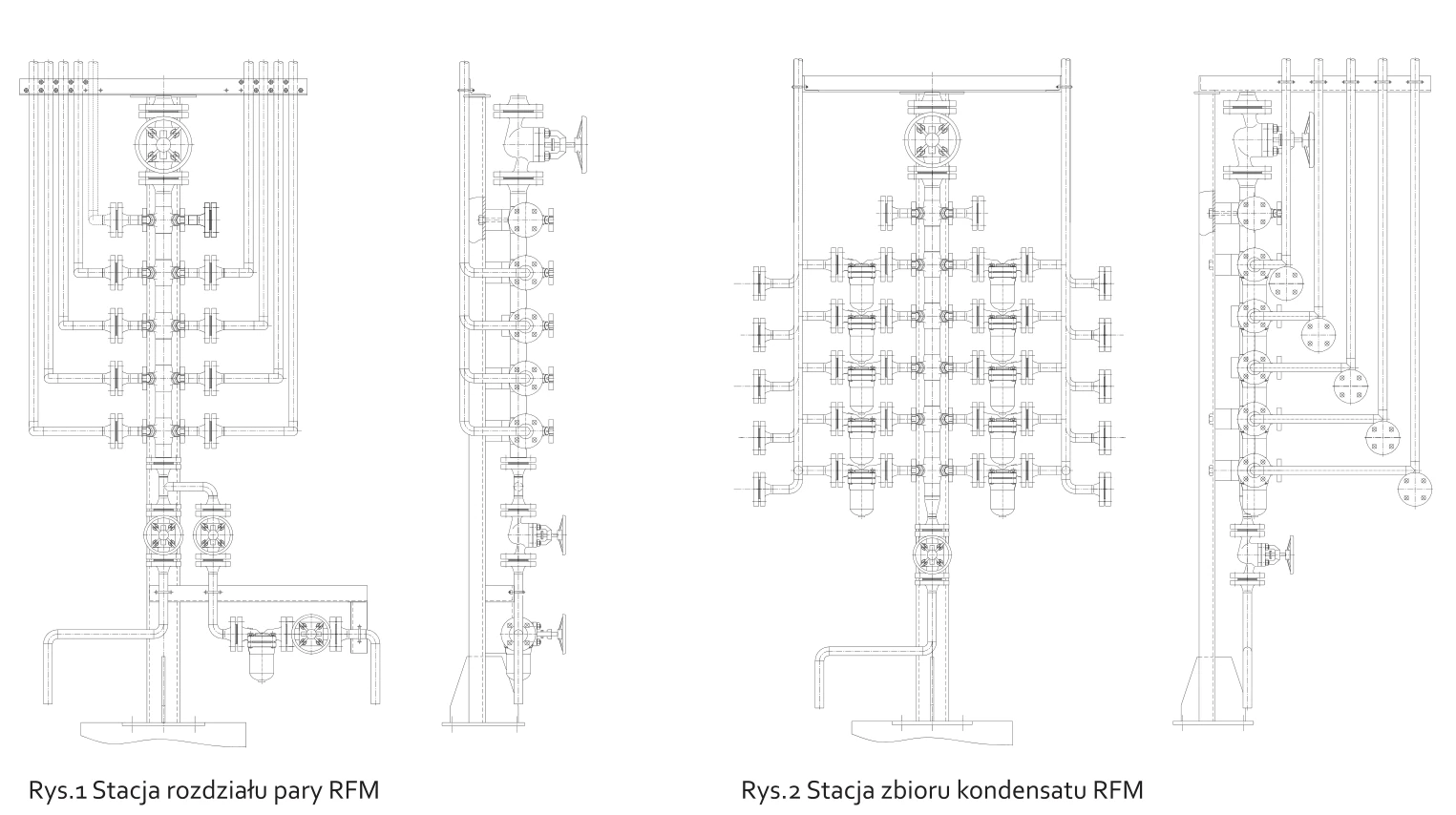
The minimum required product temperature is the starting point for selecting the pressure and hence the saturation temperature of the heating steam. An RFM station supplies tracing lines alongside the process pipe. The resulting condensate passes through a ZFM collection station to the main return header. Locating the traps together in an accessible position makes inspection and servicing easier.
Selecting the trap type
The described system uses inverted bucket traps, particularly for low or variable pressure, and thermostatic bimetallic traps. For the latter, use above 0.4 MPa is recommended. Adjusting condensate subcooling helps match heat delivery to the duty. Freeze protection may require a different setting from maintaining a high process temperature; the device name alone does not determine a universal setting.
Construction that supports maintenance
The manifold modules use steel forgings with isolation valves integrated into the station. A valve and its seat can be replaced without dismantling the complete manifold. Complete assemblies include supports and accessories. The completed projects are historical examples of this arrangement.