Steam tracing systems: manifold selection and servicing
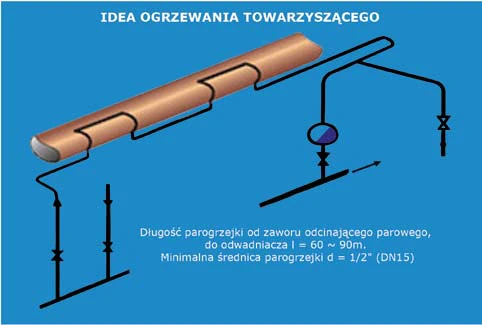
Effective steam tracing requires both steam supply and predictable condensate removal. Trap type and manifold construction affect both duties.
Steam distribution and grouped drainage
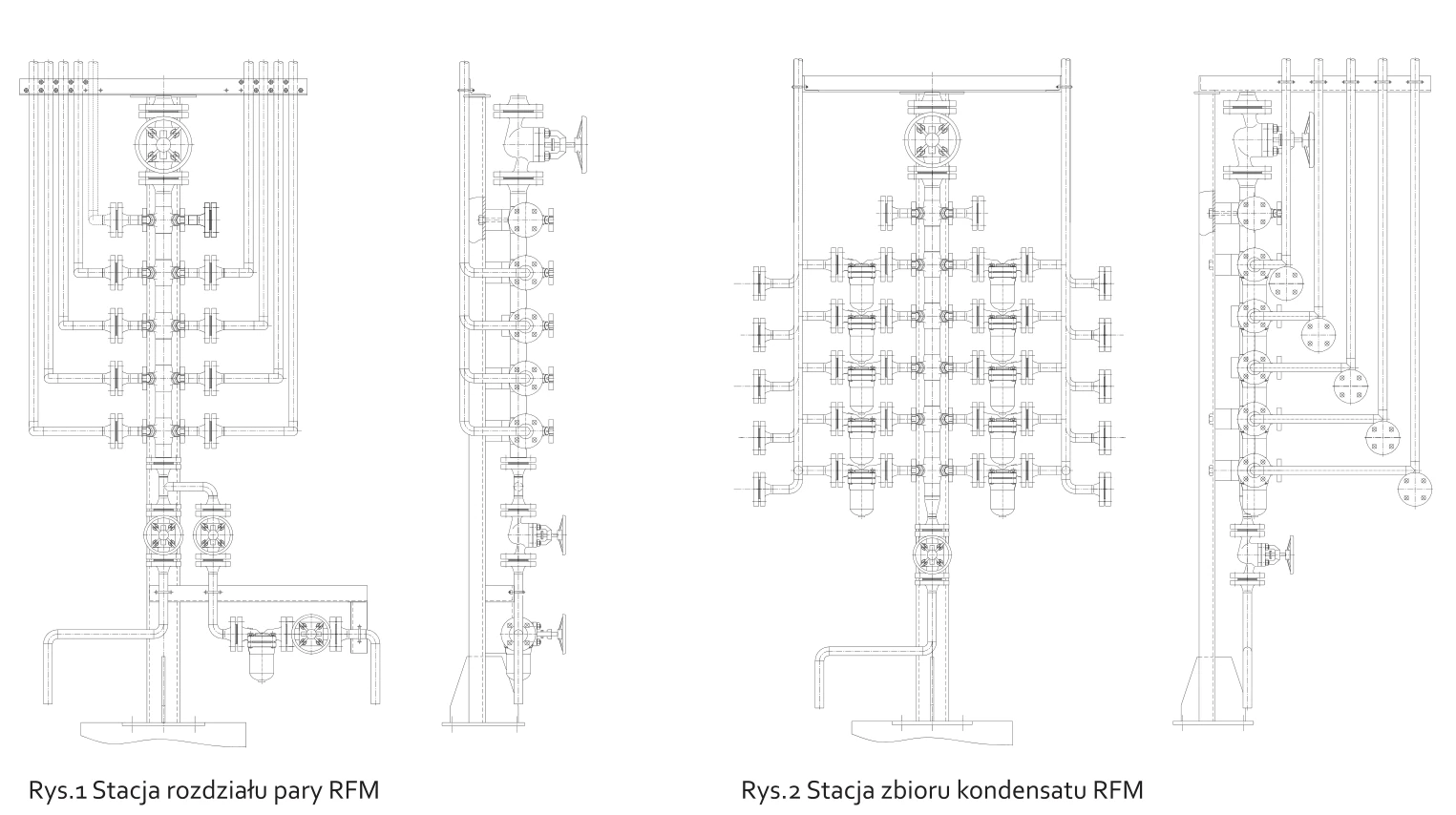
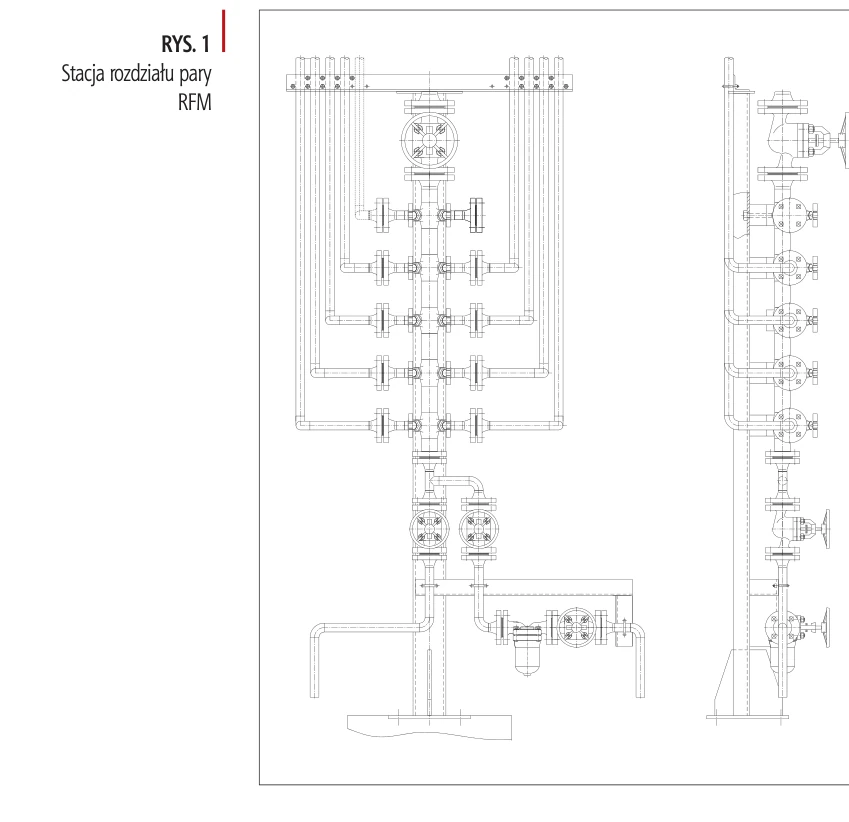
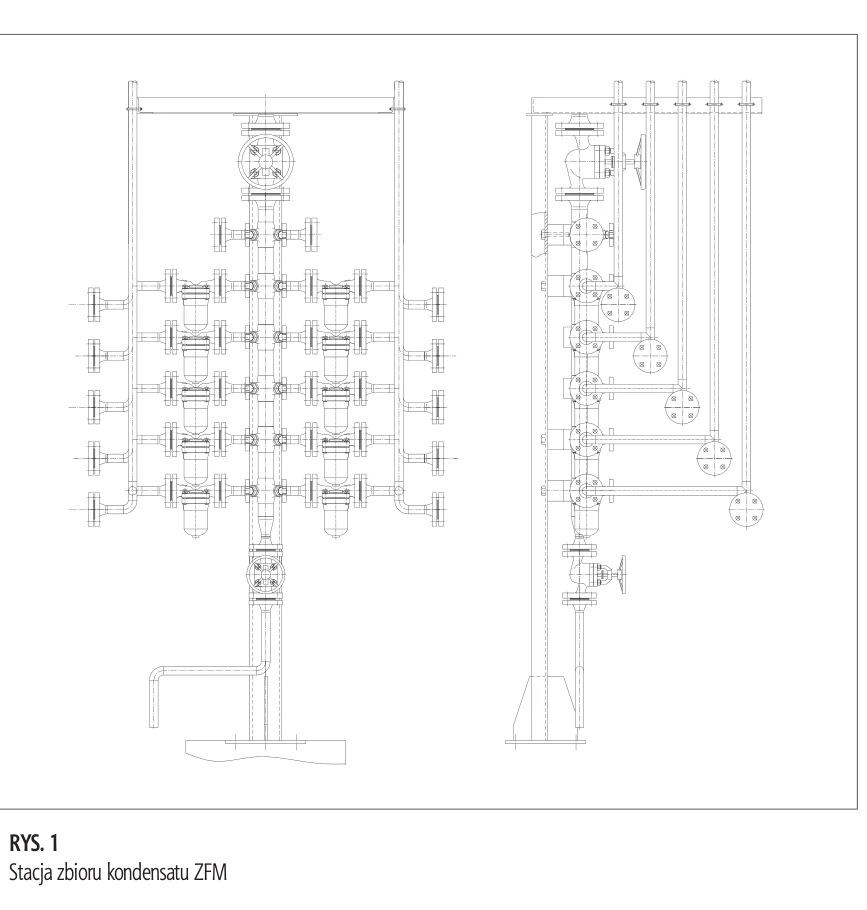
Steam passes from a common line through RFM distribution to multiple tracers, and condensate returns through ZFM collection to the return system. Grouping the traps gives operators access to inspection points. The drawings show the distribution and collection stations as complementary parts of the same circuit.
Subcooling and the heating duty
In the described arrangement, selection includes inverted bucket traps for low or variable conditions and bimetallic traps above 0.4 MPa. Adjustable devices allow the subcooling of discharged condensate to be changed. Selection depends on whether the circuit provides freeze protection or maintains a higher product temperature. These requirements need to be considered together with the steam conditions.
Replaceable valves and prefabrication
The modular manifolds described use steel forgings and integrated valves replaceable together with their seats. This is intended to reduce dismantling during servicing. Complete stations include traps and supports.