Condensate and water hammer: SPZ-12 DUO and TUW
The solutions presented in the first quarter of 2014 address two duties: removing condensate droplets from steam and limiting the effects of water hammer. These duties require devices with different operating principles.
Why steam needs moisture separation
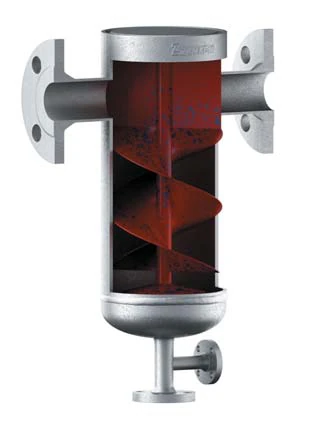
Heat losses cause part of the steam to condense. Condensate can interfere with equipment that requires dry steam. The SPZ-12 DUO described uses swirling flow and centrifugal action to separate droplets, with the separated liquid removed through the drainage arrangement. The separation process itself requires no external energy supply.
Interpreting the stated efficiency
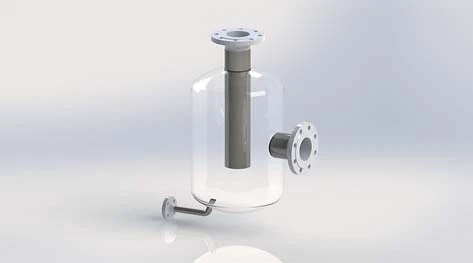
The stated separation efficiency for the separator is 98–99%, without a complete set of measurement conditions. This figure is not a guarantee for every flow rate or installation. The cutaway helps identify the flow path and internal components but does not replace the datasheet for the selected version or the selection process.
TUW: buffering pressure surges
The TUW damper uses an air-and-steam cushion to limit sudden pressure changes. Its duty differs from condensate separation: it affects a dynamic event in the installation. Its location must suit the system, and using a damper does not remove the need for correct drainage. Both devices should therefore be considered in relation to the cause of the problem.